 CYBRIX International
CYBRIX International
CYBRIX International
The wave power generator featured in our background represents the next frontier of Cybrix R&D. While the content below details our industry-leading models currently in operation, this visualization serves as a window into the potential future of marine energy—a sector we are actively modeling today to ensure it becomes a "now" thing tomorrow.
1. At the heart of every solution we deploy lies the Cybrix-Core Engine, a proprietary neural architecture designed from the ground up to solve the non-linear problems of the alternative energy industry. Unlike general-purpose AI models, Cybrix-Core is pre-trained on a decade of industrial telemetry and electrical grid behavior.
2. This domain-specific approach allows our models to understand the "physics of energy," not just the statistics of data. The architecture utilizes a "Temporal Attention Mechanism" that prioritizes historical patterns based on current atmospheric conditions, allowing for unprecedented predictive accuracy.
3. A key differentiator is our use of Physics-Informed Neural Networks (PINNs). We integrate the laws of thermodynamics and fluid dynamics directly into the loss functions of our models, ensuring that the AI cannot suggest an operational adjustment that violates physical constraints.

4. Cybrix technology is optimized to run on low-power hardware at the edge. In offshore or remote desert environments, our models perform 90% of their inference without contacting the central cloud, ensuring zero-latency response times for safety-critical maneuvers.
5. We have pioneered the "Autonomous Grid Orchestrator," allowing different energy assets—wind, solar, and storage—to communicate and balance each other without human intervention, preventing frequency deviations in real-time.
6. Every decision made by a Cybrix model is accompanied by a transparent reasoning log. Grid operators can see exactly which variables led to a specific recommendation, building the trust necessary for wide-scale adoption of autonomous systems.
7. We utilize federated learning techniques, allowing our models to learn from across our global fleet without ever sharing raw, sensitive data between clients. Each installation benefits from the collective intelligence of the network while maintaining data sovereignty.
8. Our models are modular, meaning insights learned from a wind farm in the North Sea can be adapted to improve the predictive maintenance of solar arrays in the Middle East. This cross-pollination ensures our clients are always at the cutting edge.
9. The final pillar of our technology is our HMI (Human-Machine Interface). We provide clarity through dashboards designed for high-stress environments, allowing operators to grasp complex grid statuses at a glance through neural-link visualizations.
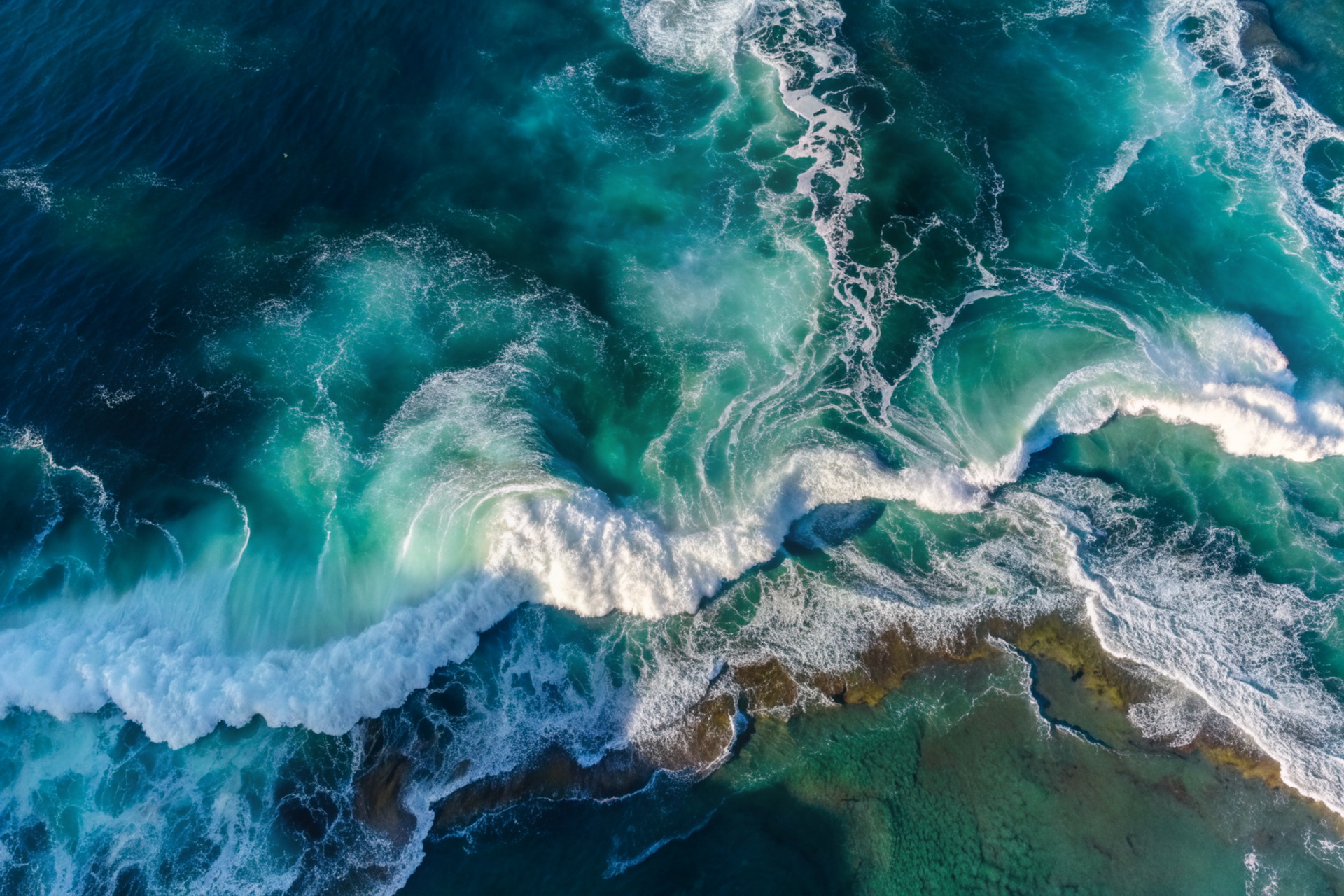
While wind and solar have reached industrial maturity, the kinetic energy of our oceans remains the most difficult variable to master. At our Hong Kong and Kaohsiung R&D hubs, we are currently training the "Poseidon" module—an extension of Cybrix-Core designed specifically for Point Absorber and Oscillating Water Column (OWC) systems.
The primary challenge in marine energy is the "chaotic salt-variable." Traditional sensors corrode or provide noisy data in high-salinity environments. Our R&D team is using synthetic data generation to train models that can filter out mechanical noise from true structural fatigue in underwater turbines. By predicting the specific resonance of a wave cycle, our AI can adjust hydraulic resistance in real-time to maximize capture while preventing catastrophic gear-strip events during storm surges.
This research isn't just about capture; it's about survivability. The wave generator seen in our hero video is a digital twin of a prototype currently being simulated in our virtual stress-test environment. We are modeling 50-year storm events against neural-controlled damping systems. When these systems finally deploy, they won't just be machines in the water; they will be intelligent nodes capable of self-preservation in the planet's harshest environment.